Alexander Lam

Discover the top ecommerce trends 2026, from AI-powered personalization to agentic commerce and mobile-first design. Learn how the future of ecommerce is smarter, faster, and more customer-driven.
Key Takeaways
→ AI is the backbone of ecommerce trends in 2026, powering product recommendations, personalization, and automation across the entire customer journey.
→ Agentic commerce is reshaping purchases, as AI agents begin making real-time decisions for shoppers, pushing brands to prioritize machine-readable data and reliable service.
→ Winning brands focus on flexibility and experience, leveraging mobile-first design, ethical practices, and personalized content to stay competitive in the fast-moving future of ecommerce.
Setting the Stage for 2026
From 2020 to 2023, ecommerce was all about speed and access. Fast shipping, one-click checkouts, and mobile optimization ruled the game. If you could deliver quickly and make the process painless, you were ahead.
Now? That’s just table stakes.
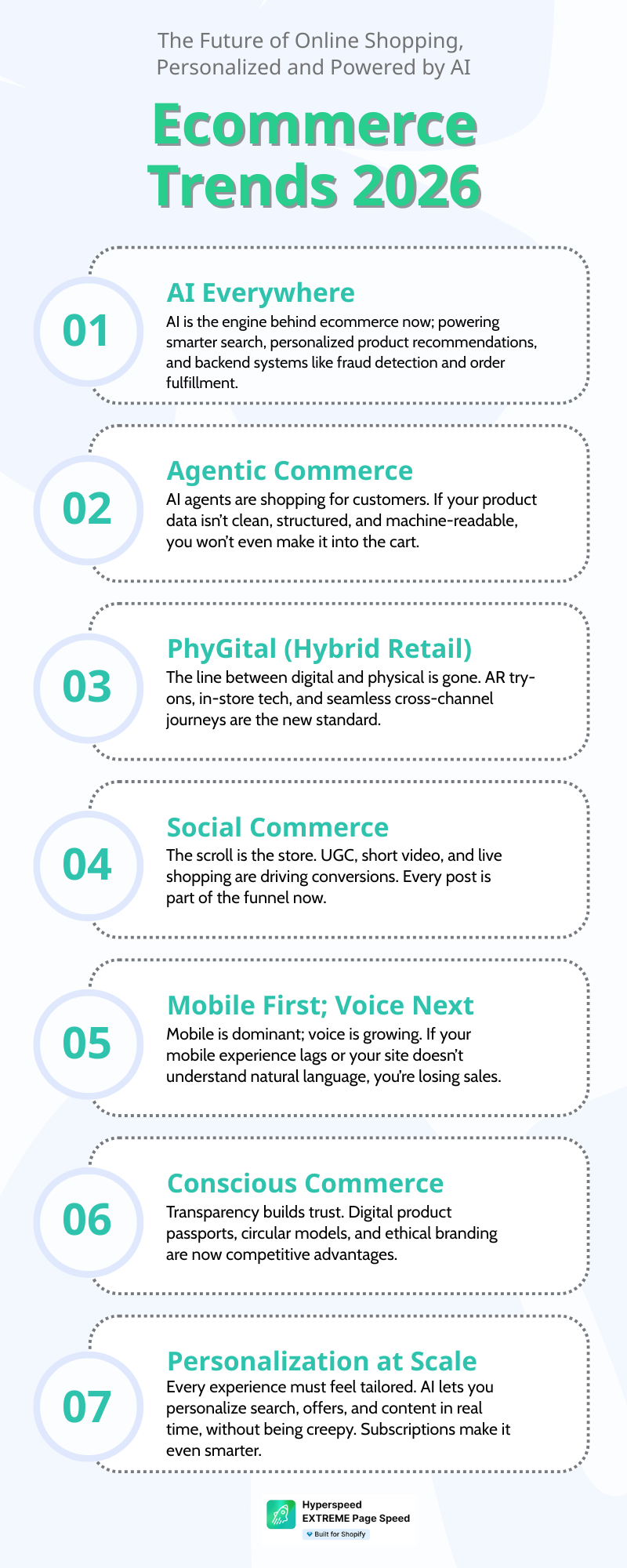
Ecommerce trends 2026 is about something deeper: intelligence and connection. Shoppers don’t just want stuff fast; they want experiences that feel personal, relevant, and even predictive. AI isn’t just powering isolated features anymore. It’s the core engine running search, recommendations, inventory, pricing, customer service — everything!
We’ve moved from static storefronts to adaptive ecosystems. Algorithms tailor what each customer sees. AI agents are starting to shop on our behalf. Every click, scroll, or pause feeds into smarter systems designed to know what we want before we do.
This shift is a transformation. And it’s happening faster than most businesses are ready for.
If your ecommerce strategy still relies on mass messaging and manual operations, you’re playing last decade’s game. The winners in this new era will be the ones who build their business models around AI.
AI Everywhere: The New Normal
AI isn’t coming to ecommerce. It’s already here, and it’s everywhere, often in ways shoppers don’t even notice. Behind the scenes and on the frontlines, artificial intelligence is reshaping how products are discovered, decisions are made, and experiences are delivered.

AI-Powered Product Discovery
Old search engines were basically glorified keyword matchers. Type “blue jacket,” and hope you didn’t get socks. Now, shoppers can type a question like “What should I wear to a fall wedding?” and actually get useful results. AI understands intent, not just words.
Visual search takes things further. Snap a photo of something you like, and AI finds it, or something better, in real time. For fashion, home goods, and lifestyle brands, this is a game-changer. Browsing is becoming optional. Discovery is becoming instant.
From Generic to Predictive: Behavior-Based Recommendations
You’ve seen the old model: “Customers who bought this also liked that.” It was fine, but generic. AI now delivers personalized recommendations based on actual user behavior: what you looked at, what you hovered on, what you abandoned in your cart days ago.
This level of granularity is the difference between “maybe relevant” and “exactly what I needed.” And yes, the numbers back it up: predictive recommendations consistently boost conversion rates and average order values.
AI in the Back Office
Behind the scenes, AI is optimizing everything customers never see — order management, inventory forecasts, fraud detection, even payment routing. It’s making fulfillment smarter and faster, while cutting costs and catching problems before they spiral.
If your competitor’s backend is AI-powered and yours still runs on spreadsheets and crossed fingers, you’re going to lose.
Agentic Commerce: When AI Shops For You
Agentic commerce is exactly what it sounds like: AI agents making purchases on behalf of customers so people don’t have to. Shoppers set preferences, budgets, and guardrails, and the AI handles the rest. It’s like having a personal assistant (except it won’t quit and won’t get tired).

What Agentic Commerce Actually Is
Instead of users browsing, comparing, and checking out, AI agents do all that autonomously. They find the best product, evaluate alternatives, optimize for price and availability, and complete the purchase.
We’re not talking sci-fi. Early versions already exist. Subscribe-and-save? Baby mode. Agentic commerce is subscribe-and-save with a PhD and unlimited caffeine.
Why Agent Compatibility Matters
If AI agents are deciding what to buy, then your store isn’t competing for the shopper’s attention anymore — it’s competing for the AI’s attention. And the AI doesn’t care about your fancy brand story.
It cares about:
- Structured product data
- Clean, machine-readable APIs
- Clear, consistent pricing and policies
If your product feed looks like a chaotic yard sale, agents simply won’t pick you. They’ll choose the retailer whose data actually makes sense.
Zero-Click Commerce: The “I Didn’t Buy This… But I Did” Era
Zero-click commerce is the endgame. A customer runs low on something? The AI orders it. A subscription is about to lapse? The AI renews it. The system notices you always buy vitamins on the 15th? Cool, it’ll handle that too.
Brand loyalty shifts from “I love this company” to “this company never screws up my automated orders.”
Reliability > vibes.
Phygital Is Not a Typo: Hybrid Experiences Redefined
Retail isn’t digital or physical anymore; it’s both, all the time. The line between online and in-store has disappeared, and customers now expect a seamless experience no matter where they shop. This is the phygital era, and it’s changing how brands show up.
Experiential + Digital = The New Standard
Online-only brands are opening showrooms. Brick-and-mortar stores are adding QR codes, virtual try-ons, and augmented reality overlays. Retail spaces are turning into brand playgrounds where the goal is to create memorable experiences.
Virtual try-ons are now common in categories like apparel, eyewear, and cosmetics. AR showrooms let customers see how furniture fits in their living room before buying. These tools reduce returns, improve confidence, and bridge the gap between browsing and buying.
In-Store Tech Makes It Frictionless
The best in-store experiences feel effortless. Checkout lines are disappearing thanks to mobile payment, contactless kiosks, and scan-and-go apps. Smart mirrors let shoppers try on different colors or styles without leaving the fitting room.
Customers expect stores to remember them. If they’ve browsed a product online, they want staff to know. If they’re in-store, they want personalized offers on their phones. Mobile-first service, like digital receipts, live inventory checks, and personalized recommendations, makes this possible.
Omnichannel Done Right
Shoppers don’t think in “channels.” They’re not saying, “I’m having an omnichannel experience right now.” They just expect it to work. Start on mobile, buy on desktop, pick up in-store, return via mail — no confusion, no friction.
To deliver this, your systems have to be aligned. That means real-time inventory visibility across locations. A single customer profile across all touchpoints. Loyalty programs that work everywhere. And customer service that understands the entire journey, not just one piece of it.
When done right, phygital commerce feels invisible. Customers don’t notice the technology; they just notice how easy everything was.
Social Shopping Gets Even Weirder
Social media used to be where people discovered products. Now, it’s where they buy them. The scroll has become the storefront, and your content strategy is now your conversion strategy.

UGC Is the New Ad Copy
Customers trust other customers more than they trust brands. That’s why user-generated content like photos, videos, reviews, unboxings, is outperforming traditional product photography across almost every vertical.
A good UGC campaign doesn’t just add authenticity. It adds conversions. Pages with real customer photos and videos routinely outperform those without. People want to see products on real people in real life, not just staged in perfect lighting.
Smart brands don’t wait for UGC to happen. They build systems to collect it, incentivize it, and highlight it. If you’re not actively showcasing your customers, you’re leaving money on the table.
Short Video and Livestreams: Your New Storefront
TikTok, Instagram Reels, YouTube Shorts — this is where product discovery is happening now. The traditional “product page” still exists, but it’s no longer the first impression. For many, that first look comes in the form of a 10-second video.
Live shopping is growing fast too. It blends entertainment and ecommerce; real-time demos, limited-time offers, Q&A with customers. It’s interactive, it’s impulsive, and it’s converting at rates traditional campaigns can’t match.
To compete here, brands need to create video content that’s native to each platform. That doesn’t mean high-budget productions. It means real, relevant, and fast. Think tutorials, behind-the-scenes, product hacks, and customer stories.
The Bottom Line
If your social channels look like a corporate billboard, you’re losing. If your product content stops at polished images, you’re invisible. Content is commerce now. The brands winning social shopping are the ones treating every post, video, and comment as part of the sales funnel.
Mobile First, Voice Second, Everything Always
For many brands, over half of all transactions now happen on phones. Yet somehow, too many mobile experiences still feel like they were designed as an afterthought.
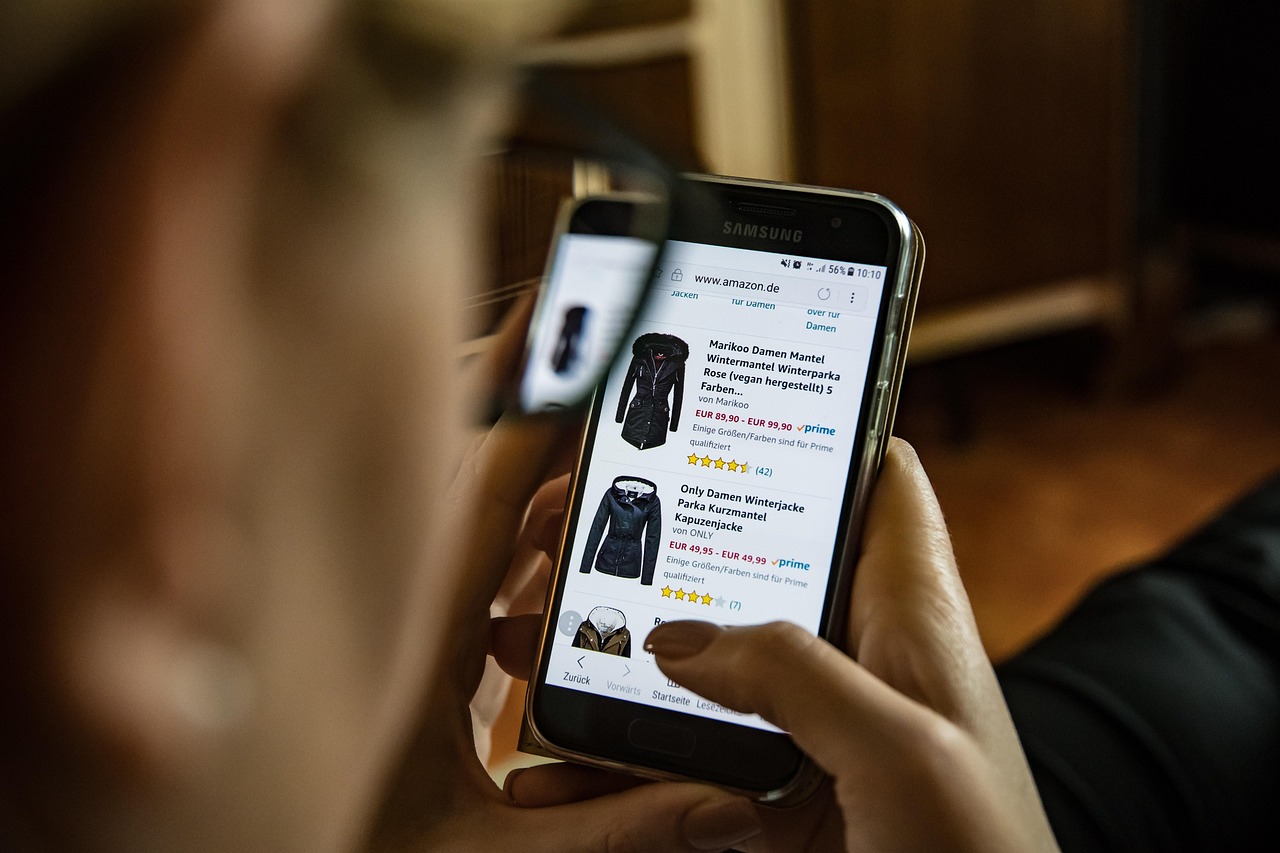
If your mobile site is slow, clunky, or forces people to pinch and zoom just to tap “Buy Now,” you’re losing sales. Full stop. Mobile-first design isn’t about shrinking your desktop site; it’s about designing for touch, for speed, and for how people actually use their phones.
Features like autofill, mobile wallets, fast-loading product pages, and simplified navigation aren’t “nice to have.” They’re the difference between a conversion and an abandoned cart.
Voice Commerce Is Quietly Growing
Shopping by voice hasn’t exploded (yet), but it’s growing steadily. People are using Alexa, Google Assistant, and Siri to reorder products, check prices, and start purchase flows. Voice commerce works best for routine purchases like reordering coffee or paper towels, but it’s expanding.
Optimizing for voice means rethinking your SEO strategy. People don’t speak in keywords. They ask questions. That means focusing on natural language, long-tail queries, and conversational content. Think “what’s the best running shoe for flat feet” instead of just “running shoes.”
Real-Time, Cross-Device Personalization Is Now Table Stakes
Customers bounce between devices constantly. They expect their experience to follow them seamlessly.
That means shared carts, consistent product recommendations, and personalized messaging that adapts in real time, regardless of the device. If someone views a product on mobile and sees something completely different on desktop, you’ve lost the plot.
Personalization isn’t a “wow” feature anymore. It’s expected. It needs to be fast, relevant, and invisible in the best way.
Conscious Commerce: Ethics as Strategy
For a growing segment of shoppers, especially Gen Z and EU consumers, buying isn’t just about price or convenience. It’s about values. Where was this made? How was it shipped? What happens when I’m done with it?

Brands that can answer those questions clearly and honestly are winning trust, loyalty, and market share.
Digital Product Passports (DPP) Are Coming
In the EU, digital product passports are becoming a requirement. These give customers visibility into a product’s lifecycle: materials, sourcing, manufacturing, shipping, and end-of-life options. They’re like nutrition labels for your supply chain.
Even outside of regulation, this level of transparency sells. Shoppers are done with vague greenwashed claims. If you say you’re “sustainable,” prove it with data, not buzzwords.
Sustainability Is More Than a Trend
Eco-conscious commerce has moved beyond canvas tote bags and biodegradable packing peanuts. Real sustainability strategies now touch every part of ecommerce: product design, packaging, shipping, returns, and even resale.
Circular retail models like product rentals, resale marketplaces, and repair programs are growing fast. They’re not just good for the planet. They’re good for margins, retention, and brand storytelling.
Packaging is a particularly easy win. Right-sized boxes. Recyclable or compostable materials. Minimal waste. Customers notice this stuff, and they talk about it.
Ethical Branding Has Business Value
People buy from brands they trust. But trust can’t be faked. Performative values don’t hold up when every customer is a potential fact-checker.
Ethical branding means more than slapping a mission statement on your homepage. It means showing the receipts: where your materials come from, how your workers are treated, how your business gives back.
Being honest about what you’re doing and what you’re still working on builds credibility. Trying to appear perfect doesn’t.
The Backbone of Experience: Personalization
Let’s be clear: personalization is not “Hi [FirstName]!” at the top of a marketing email. That’s not personal, that’s mail merge.
And in 2026, it’s not nearly enough.

Shoppers now expect every part of the experience — search, navigation, offers, even content — to adapt to them in real time, based on what they actually do, not what some demographic spreadsheet says they might like.
Make Every Touchpoint Smarter
If a customer browses hiking boots, don’t show them high heels next time they visit. If they keep abandoning carts at the payment screen, maybe don’t hit them with a 10-step checkout process again.
Personalization should shape:
- Search results tailored to intent
- Navigation that reflects interests
- Product recommendations based on behavior
- Content (blogs, videos, FAQs) that aligns with real-time signals
Done right, personalization makes shopping feel intuitive. Done poorly, it feels creepy, or worse, totally irrelevant.
AI Makes It Scalable (If You Use It Wisely)
AI is what makes personalization work at scale. It handles massive volumes of customer data, browsing behavior, purchase history, timing, device use, and turns it into meaningful experiences. It’s not about knowing everything; it’s about using what you do know in a way that feels helpful, not invasive.
Pro tip: transparency builds trust. Let customers know why they’re seeing what they’re seeing, and give them control to adjust it. Consent beats surveillance every time.
Subscriptions: Not Just for Recurring Revenue
Subscription models are personalization engines. Every recurring order is a new data point. Every skipped month or swapped product tells you something valuable.
Use this data to adapt future shipments, deliver better recommendations, and create a relationship that feels personal, and not transactional.
The best subscription brands don’t just send products. They send the right products at the right time. That’s personalization in action.
Preparing for the Future of Ecommerce
Reading about trends is great. Acting on them? That’s where things get real. Not every shiny innovation will fit your business, and that’s fine. The key is knowing which shifts matter to your customers and building the capabilities to respond fast.

Focus Beats FOMO
Trying to chase every trend is a shortcut to burnout. Instead, filter innovations through your own customer lens. Does this serve your audience? Does it solve a real problem in your business? If not, skip it.
A small brand that nails one or two trends will always outperform a big one that half-implements ten.
Adaptability Wins
Rigid platforms and fixed processes won’t cut it anymore. Ecommerce in 2026 demands flexibility; think modular tools, API-first systems, and software that plays nicely with others.
The brands that win will be the ones that can swap in new tools, test new ideas, and move quickly without breaking everything.
Automate Intelligently
AI isn’t just for show. Use it where it actually helps: automating repetitive tasks, surfacing insights, personalizing experiences, or optimizing backend operations.
The goal isn’t to replace your team; it’s to free them up to focus on things that require human creativity and judgment.
Break the Silos
Your data, your teams, your tools – they should all be working together. If your marketing team doesn’t know what your customer service team sees, or your checkout system doesn’t talk to your CRM, you’re leaking value.
Final Thoughts: The Future Is Weird, and That’s Good
AI is no longer a side tool or a novelty. It’s running product discovery, personalizing customer experiences, managing inventory, and making purchase decisions. Quietly, relentlessly, it’s reshaping ecommerce from the ground up.
The brands winning in 2026 aren’t necessarily the biggest. They’re the fastest. The smartest. The ones willing to experiment, iterate, and obsess over what their customers actually want—before those customers even say it out loud.
This isn’t just a tech shift. It’s a mindset shift. From static to adaptive. From transactional to relational. From controlling the customer journey to learning from it in real time.
If ecommerce used to be about building a store, now it’s about building a system: a living, learning experience that changes with every click, swipe, and scroll.
And yes, some of it feels weird. Zero-click checkouts. AI agents placing orders. Virtual try-ons in your kitchen. But weird isn’t bad. Weird is where innovation lives.
So if you’re feeling behind, good news: you’re right on time. This is the best moment to rethink everything you thought you knew about selling online.
Start small. Move fast. Build smart. The rest will follow.
Compare how fast your store is to a huge sample of other stores. Get benchmarked and find out where you can improve your speed to make more sales. How fast is your Shopify store?
Frequently Asked Questions
How is AI changing ecommerce in 2026?
AI is powering ecommerce by transforming product discovery, real-time personalization, and customer support. AI-powered systems analyze behavior to make product recommendations, optimize shopping experiences, and automate key parts of the online journey.
What does “agentic commerce” mean for shoppers?
Agentic commerce means AI agents now make purchases for consumers based on real-time data, preferences, and past shopping behavior. This trend shifts ecommerce toward zero-click experiences, where reliable fulfillment matters more than branding or visuals.
Why is mobile-first design still critical in 2026?
Mobile-first ecommerce ensures that shoppers enjoy fast, personalized shopping experiences across devices. With most purchases happening via mobile, brands must optimize mobile product pages, search, and checkout to increase conversions and meet customer expectations.
How can brands use personalization effectively without being invasive?
Effective personalization uses real-time behavior, preferences, and AI-powered systems to tailor search, product recommendations, and content. Transparency, consent, and value-based experiences ensure customers feel helped—not watched—during their shopping journey.
What ecommerce trends should smaller brands focus on first?
Smaller brands should prioritize AI-powered product recommendations, mobile optimization, and customer experience personalization. Focusing on trends like automation and social commerce helps build loyalty and compete with larger ecommerce players over time.